Machines don’t need eyes to notice patterns — they need structure. Pattern recognition helps computers detect regularities in data, whether it's a sound, image, or sequence of numbers. It’s what allows systems to recognize handwritten digits, identify objects in photos, or detect spam in emails. While humans do this naturally, teaching machines to do the same involves models, training, and a lot of refinement. Pattern recognition sits at the core of many machine learning systems and is one of the most practical ways machines learn from experience.
What Is Pattern Recognition?
Pattern recognition in machine learning is the process of finding recurring structures or similarities in data and assigning them meaning. It’s used to categorize, group, or predict data points based on features the system has learned during training.
In supervised learning, this process relies on labeled data — samples that come with known outcomes. Unsupervised learning, on the other hand, involves data without labels, pushing the system to uncover structure on its own. The end goal is always the same: learn from existing patterns to make sense of new data.
Whether applied to speech, images, or sensor readings, pattern recognition is how machines convert raw inputs into decisions or classifications.
Key Components and Techniques
Pattern recognition uses a combination of techniques to turn messy data into something a model can understand and learn from. These steps include identifying useful information, applying a method to process it, and then testing how well it works.
Feature Extraction
Before recognizing a pattern, the system needs to identify what parts of the data matter. Feature extraction is the step where raw data is transformed into a more manageable and relevant form. In images, features could include color, shape, or pixel intensity. In text, it could be word frequency or position.
Traditional systems required manual feature design. Today, many algorithms — particularly those based on deep learning — can learn features on their own during training. This has made feature extraction more adaptive, especially in areas like speech or image processing.
Classification Algorithms
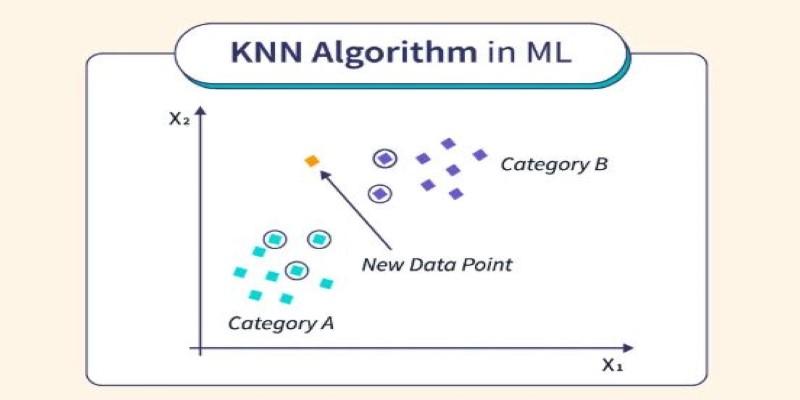
After extracting features, the model needs to assign categories or make predictions. This is where classification algorithms come in. These models learn how different combinations of features relate to different outcomes.
A few common approaches include:
- k-Nearest Neighbors (k-NN): Classifies data based on the labels of nearby points.
- Support Vector Machines (SVM): Build a boundary that separates different classes as clearly as possible.
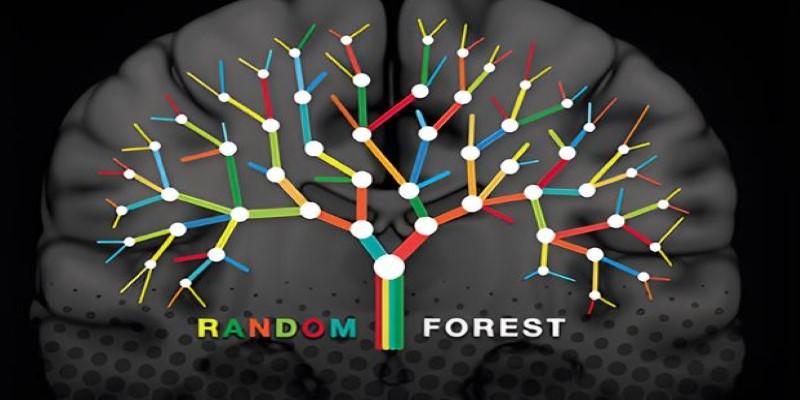
- Decision Trees: Use a series of rules to decide the class of each sample.
- Neural Networks: Build layered systems that learn abstract patterns in complex data.
The choice of algorithm depends on the size and nature of the dataset, the required speed, and the complexity of the task.
Model Evaluation
Once trained, a pattern recognition system needs to be tested. Model evaluation measures how accurately the system makes predictions. Common metrics include accuracy, precision, recall, and F1-score.
Splitting the data into training and test sets helps ensure that the model performs well not just on known data, but on new, unseen inputs. Cross-validation, where the dataset is divided into several parts and tested multiple times, is often used to confirm the model’s reliability.
These evaluation steps are essential to avoid overfitting and make sure the model generalizes well.
Applications in the Real World
Pattern recognition isn’t just a research topic. It’s used in many real-world technologies that depend on understanding complex data.
Image and Facial Recognition
When systems analyze an image, they look for visual patterns such as shapes, edges, and textures. Facial recognition tools use this ability to match faces to identities, even under different lighting or angles.
In healthcare, image-based pattern recognition helps detect diseases early by spotting subtle abnormalities in scans that might go unnoticed by the human eye.
Speech and Language Processing
Pattern recognition enables voice assistants to interpret spoken commands, even with varying accents or background noise. In text, it helps systems understand grammar, context, or intent. Whether it's recognizing spoken words or identifying sentiment in a sentence, these systems rely on extracting meaningful patterns from audio or written language.
Fraud Detection and Security

Banking systems use pattern recognition to identify unusual behavior. A sudden purchase in another country or a login from a new device could trigger alerts. These systems track user behavior and spot patterns that don't match past activity, helping prevent fraud or security breaches.
Scientific and Industrial Uses
In manufacturing, sensors monitor equipment for signs of failure. If a vibration pattern or temperature shift appears abnormal, the system can alert operators. In fields like astronomy or geology, researchers use pattern recognition to classify signals or images gathered from space or remote environments.
These practical uses show how pattern recognition enables machines to interact with dynamic, unpredictable data.
Challenges and Limitations
Pattern recognition brings flexibility and insight, but it’s not foolproof.
Noisy or Incomplete Data: Real-world data often includes missing values, errors, or irrelevant features. A model can misinterpret this noise as meaningful, leading to incorrect predictions.
Bias in Training Data: If the dataset doesn’t represent the real population well, the model will learn skewed patterns. This can lead to unfair outcomes or poor performance in certain groups.
Overfitting: A model might perform well on training data but fail on new examples if it learns overly specific patterns. This usually happens when the model is too complex or the dataset is too small.
High Dimensionality: When data has many features, it becomes harder to find meaningful patterns. Dimensionality reduction techniques or larger datasets are often needed to counteract this.
Interpretability: Advanced models like deep neural networks often deliver strong results, but their internal logic is difficult to interpret. This lack of clarity can raise concerns in areas where decision transparency is critical.
Conclusion
Pattern recognition gives machine learning systems the ability to make sense of real-world data — not by memorizing, but by observing structure. It’s what allows a model to connect a new image to a category it’s seen before or notice a shift in a sequence that suggests something important. Its strength lies in flexibility, but that comes with a need for careful design, testing, and understanding of limitations. When used responsibly, pattern recognition transforms static data into meaningful action, helping machines respond with context, not just code.