Human and artificial intelligence are now working together in transformative ways. Rather than replacing human cognition, AI complements our strengths, enabling us to create robust solutions through collaboration. The collaboration is transforming industries, making scientific discoveries, and addressing complex issues that would be impossible for any one person to manage alone. We can harness the capabilities of AI to complement human ingenuity, creating significant opportunities for innovation and advancement.
The Unique Strengths of Human Cognition

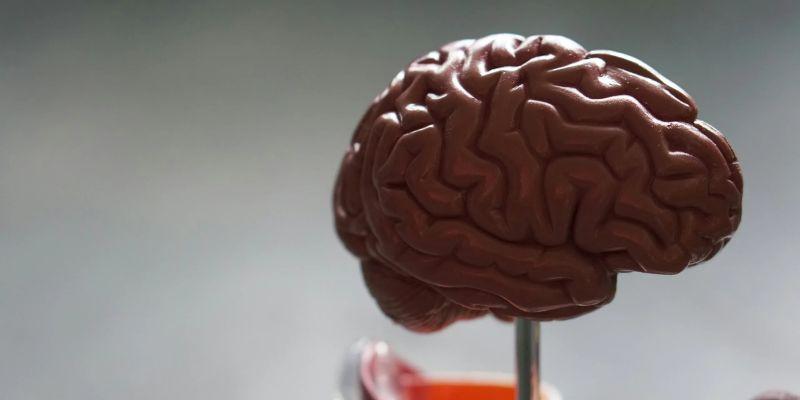
There are extraordinary powers and abilities of the human brain that machines can hardly express. It is in our control to cognitively understand and read context, to cope with ambiguity, and leap intuitively, which makes us uniquely different in the cognitive world.
Creative Problem-Solving
People are masterful in conceiving solutions to issues and exploring new directions. We can make comparisons between seemingly unrelated things, draw on our own past life experiences, and create innovative new resolutions. This imaginative freedom is what enables us to face issues that demand thinking beyond the manuals.
Emotional Intelligence and Social Reasoning
It is also distinctly human how we can read emotional cues, comprehend social actions, and succeed in complex interpersonal situations. We perceive the slightest of ideas, identify with other people, and make judgments influenced by social conditions; this is precisely the kind of skills in leadership, teamwork, and communication that are valued.
Adaptability and Learning from Limited Data
Human beings are capable of learning very quickly and with few examples of new conditions. A child may be able to identify a dog with fewer than a few types of breeds, but the AI can do the same with thousands of training examples.
Where Machine Models Excel
The AI systems come with their entourage of mighty abilities in partnerships where consistency, speed, and vast volumes of information are necessary.
Pattern Recognition at Scale
Machine learning models can detect trends within large datasets that cannot be analyzed manually. They can identify weak markets in the financial market, or notice anomalies in medical imaging, or process millions of customer interactions to identify behavioral patterns.
Consistent Performance
When compared to human beings, AI systems are not subject to AI-related fatigue, emotional moods, or cognitive biases that influence decision-making. They show uniform rates of performance at repetitive tasks and are applicable in allowable quality and processes that are treated uniformly.
Computational Speed and Memory
Machines can receive information, calculate, and do so much faster than a person can. They can process several variables simultaneously, can measure past historical data with perfect accuracy, and can carry out complicated algorithms in a matter of milliseconds.
Successful Human-AI Partnerships in Action
The strongest argument in favour of human-AI cooperation can be gathered from and observed in real-life examples of relevant collaboration, leading to impressive outcomes.
Medical Diagnosis and Treatment
Radiologists who use AI imaging systems will achieve a more accurate diagnosis of a particular disease than human hands alone. The AI identifies the possible points of concern and makes them accurate, whereas doctors use their clinical judgment, assess the history, and make subtle treatment choices. Such a partnership has enhanced the rate of early disease diagnosis, including cancer, and minimized false diagnoses.
Scientific Research and Discovery
Machine learning models are actually used by climate scientists to analyze large amounts of environmental data and employ human knowledge to understand and interpret results, as well as to produce new experiments. Artificial intelligence can define trends in temperature, precipitation, and atmospheric conditions, and scientists can offer abstract reasoning and scientific principles necessary to interpret the implications of these trends.
Creative Industries
Artists, musicians, and writers are combining forces with artificial intelligence to see their creative opportunities increase. Artificial intelligence can produce preliminary ideas, offer options, and address technical constraints, while humans provide aesthetic inspiration, pathos, and cultural context. Such a partnership does not replace creativity; it only enhances it.
Financial Services
Algorithms and the human approach blend in the investment firms. AI models can make trades using a range of market patterns and automatically achieve desired functionality. In contrast, human analysts understand the broader patterns in the economy and assess geopolitical risks when strategically allocating funds in a portfolio.
Optimizing the Human-AI Partnership
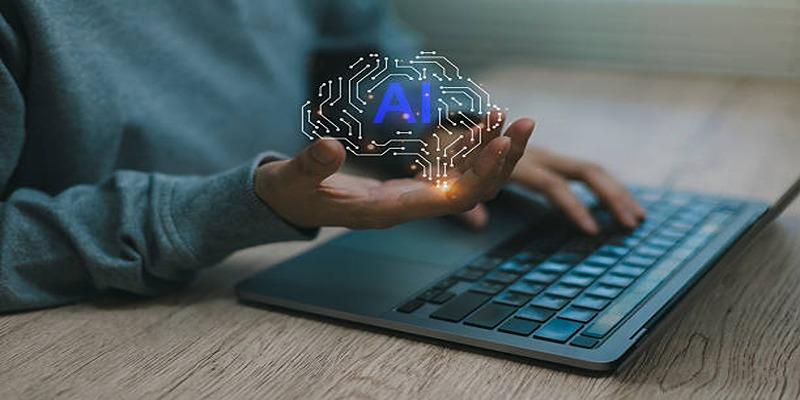
Organizations should carefully model these partnerships around the strengths of each to maximize the value of the human-AI collaboration.
Clear Role Definition
Effective collaborations entail understanding when human beings should be in control and when AI should dominate. It is expected that humans are outstanding in scenarios where creativity, ethical decision-making, or complicated social thinking are needed. In contrast, AI works better in the areas of pattern recognition, data, and routine decision-making.
Continuous Learning Loops
Human-AI systems are best developed when they form a feedback loop, where human observations are used to improve AI models and vice versa, on this feedback level. In this cyclic endeavor, the partners involved can develop and enhance their effective working performance over time.
Maintaining Human Agency
Although AI may offer suggestions and automate workflows, it is essential to maintain human oversight in the process of making human-based decisions. This highlights the importance of making key decisions in line with human values, ethical considerations, and long-term strategies.
Challenges and Considerations
Although human-AI partnerships have a bright future, several obstacles need to be resolved to reach their maximum potential.
Trust and Transparency
To be able to trust AI systems and cooperate with them efficiently, humans should be knowledgeable about how these systems arrive at their conclusions. A black-box algorithm may introduce hesitation and hinder teamwork. It can be achieved through the development of explainable AI-based systems that can foster trust and provide more sensible cooperation.
Skills Development
With the increasing use of AI, human beings must ensure that they develop inherent skills that complement machine abilities, rather than inhibitory skills. It emphasizes aspects such as creative thinking, emotional intelligence, strategic thinking, and ethical decision-making.
Bias and Fairness
Bias may affect both human and AI decision-making. Collaborative systems must have mechanisms for detecting and mitigating such biases, ensuring fair and equitable outcomes across diverse populations and situations.
The Future: Stronger Human-AI Partnerships
Advances in natural language processing are making it easier for humans to communicate with AI systems using everyday language. Meanwhile, improved visualization tools help humans better understand AI analysis and recommendations.
Training programs are emerging that teach people how to work effectively with AI systems, just as we learn to collaborate with human colleagues. These programs focus on understanding AI capabilities and limitations, interpreting AI outputs, and maintaining critical thinking skills.
Organizations are also developing new frameworks for measuring the success of human-AI partnerships, moving beyond simple efficiency metrics to include factors like innovation, adaptability, and long-term value creation.
Final Thoughts
The human-AI collaborations are going to offer the most significant advances over the next ten years, incorporating the strengths of each other. The way forward does not need to fear AI, because we should develop new systems that maximize human potential and utilize machine intelligence. During the process of success, it is required to be ever thoughtful, constantly adapt to learn, and preserve human values. Through practical cooperation, new manifestations of creative potential, ability, and advancement may be unlocked, and unliberated possibilities of technology and the human may be explored.