
Artificial Intelligence (AI) is transforming the healthcare sector with groundbreaking advancements. This approach improves patient outcomes, streamlines operations, and enables faster, more accurate decision-making. From early disease detection to personalized treatment plans, AI has become essential for medical professionals and patients.
Its ability to analyze massive datasets and identify complex patterns makes it a game-changer in healthcare delivery. As technology evolves, AI is bridging gaps in accessibility, affordability, and efficiency. In this article, we explore its key benefits and use cases, showcasing how AI is shaping the future of medicine in real time.
What Is AI in Healthcare?
Artificial Intelligence in healthcare refers to using advanced algorithms, machine learning models, and automation to simulate human intelligence in medical processes. It empowers doctors, researchers, and healthcare providers to diagnose, treat, and monitor patients more effectively.
Unlike traditional healthcare systems, AI can process vast medical datasets in seconds, reducing errors and improving accuracy. Typical AI applications include disease prediction, diagnostic imaging, clinical decision support, robotic surgery, and personalized treatment plans.
With rising demand for precision medicine, AI is a critical solution to deliver better outcomes while addressing challenges like workforce shortages and high healthcare costs.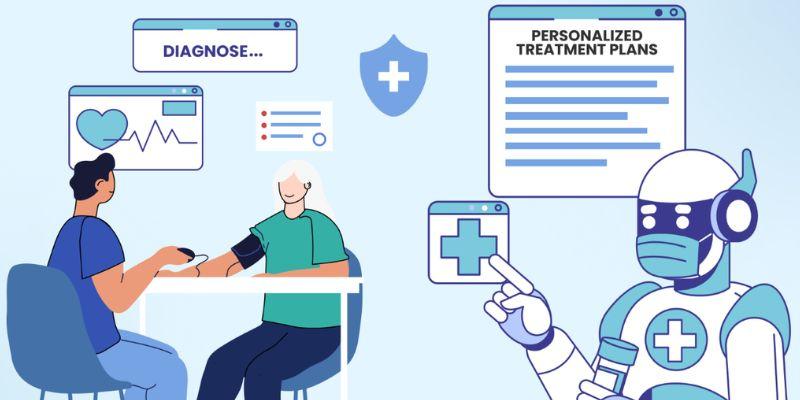
Key Benefits of AI in Healthcare:
Improved Diagnosis Accuracy:
AI-powered diagnostic systems analyze medical imaging, lab reports, and genetic data more accurately than traditional methods. Tools like IBM Watson Health and Google DeepMind help identify conditions such as cancer, heart disease, and neurological disorders earlier, ensuring timely treatment.
Personalized Treatment Plans:
AI enables precision medicine by tailoring treatments based on genetic makeup, lifestyle, and patient history. Machine learning models recommend more effective therapies that reduce unnecessary side effects, especially in oncology and chronic disease management.
Operational Efficiency:
Hospitals and clinics use AI for appointment scheduling, patient triage, and administrative tasks. By automating routine processes, AI reduces waiting times, minimizes errors, and frees healthcare staff to focus on patient care.
Cost Reduction:
Through predictive analytics and automation, AI lowers unnecessary testing, reduces hospital readmissions, and ensures efficient resource use. This significantly reduces healthcare costs for patients and providers alike.
Better Patient Engagement:
AI-driven chatbots and virtual health assistants provide patients 24/7 support, medication reminders, and symptom checkers. This improves patient engagement, adherence to treatment, and overall healthcare experiences.
Real-World Use Cases of AI in Healthcare:
Disease Prediction and Prevention:
AI models predict the likelihood of developing diabetes, heart disease, or cancer. They analyze genetic data, lifestyle patterns, and medical history. This helps doctors identify risks at an early stage. Preventive care can then be applied before symptoms even appear. In the future, these systems may also suggest personalized lifestyle changes for each patient.
Diagnostic Imaging:
AI-powered imaging tools accurately detect anomalies in X-rays, CT scans, and MRIs. They can identify tumors and other irregularities earlier than human radiologists, increasing survival rates and reducing misdiagnosis. Some hospitals already rely on AI systems to double-check results. The technology continues to improve and could become a standard part of global healthcare.
Drug Discovery and Development:
AI accelerates drug development by predicting how molecules interact with diseases. This reduces the time and cost needed to bring treatments to market. During the pandemic, AI helped researchers test potential vaccines faster. In the future, AI may create medicines tailored to an individual’s genetic makeup. This could revolutionize how we treat chronic and rare diseases.
Virtual Health Assistants:
AI chatbots and assistants guide patients through symptom analysis, medication reminders, and health queries. Platforms like Ada Health and Buoy Health are widely used today. They reduce the burden on doctors and save patients time. Virtual assistants may become the first line of medical support in remote areas. Their role is expected to expand as they learn more from patient interactions.
Robotic Surgery:
AI-powered robots, such as the da Vinci system, assist surgeons in complex operations. They improve accuracy, reduce risks, and shorten recovery times. These robots can perform minimally invasive surgeries with high precision. In the coming years, smaller and smarter surgical robots may enter regular hospitals, making advanced surgeries available to more people worldwide.
Clinical Decision Support Systems (CDSS):
AI systems provide doctors with evidence-based recommendations. They analyze patient records, research data, and medical guidelines to support accurate decisions. This helps reduce human error and improve treatment outcomes. Some hospitals are already testing CDSS in routine care. As databases grow, CDSS will become even more reliable and personalized.
Remote Patient Monitoring:
AI-enabled wearable devices track heart rate, blood pressure, and glucose levels in real time. They alert patients and doctors when abnormalities appear. This ensures early detection and continuous care for chronic patients. For elderly individuals, wearables can even prevent emergencies by monitoring vital signs around the clock. Remote monitoring will likely become an essential part of home healthcare.
Mental Health Support:
AI chatbots and apps provide emotional support, mood tracking, and cognitive behavioral therapy. They offer help to individuals struggling with stress, anxiety, or depression. This support is available anytime, making it accessible and stigma-free. While not a replacement for professional therapy, these tools bridge the gap. They may soon integrate with wearables to detect mood changes instantly.
Challenges and Limitations of AI in Healthcare:
- Data Privacy Concerns: Patient data must be kept secure to prevent breaches. Strong encryption and compliance with laws help protect sensitive health records.
- Bias in Algorithms: AI can be biased if trained on limited data. Using diverse datasets and regular checks reduces unfair results.
- High Implementation Costs: AI requires significant investments in tools and training. Smaller facilities may struggle with the costs of upgrades and skilled staff.
- Ethical Considerations: AI decisions must stay transparent and accountable. Human oversight and clear rules keep systems fair and responsible.
Overcoming these barriers is essential to fully realizing AI’s potential in healthcare.
Conclusion
Artificial Intelligence is no longer just a futuristic concept in healthcare; it is already redefining the industry with practical, real-world applications. From improving diagnostic accuracy to making treatments more personalized and efficient, AI is enhancing the quality of care for millions worldwide.
AI has the potential to create a healthier, more connected society by reducing costs and bridging healthcare accessibility gaps. As technology evolves, the adoption of AI in healthcare will only accelerate. Now is the time for medical institutions, professionals, and patients to embrace this innovation and be part of a smarter, data-driven future of healthcare.