Conversations hold a wealth of information, yet most of it slips away once the words are spoken. Imagine every customer call, every complaint, every question carrying clues about what people need, what frustrates them, and what keeps them loyal. That’s what speech analytics uncovers. It’s the practice of listening with more than ears—transforming spoken words into structured insights that can guide decisions. Companies no longer have to rely on guesswork or limited surveys; they can understand their audience by studying the conversations already happening. At its core, speech analytics is about finding meaning in everyday dialogue.
Understanding Speech Analytics and How It Works?
Speech analytics refers to the use of software to process recorded or real-time conversations, typically between customers and support teams. The goal is to turn spoken language into data that can be analyzed. It begins with speech recognition—converting audio to text. Once the text is created, the software searches for keywords, phrases, tone of voice, emotional cues, and even silence. This process can help identify the root causes of issues, measure sentiment, and monitor compliance.
The core technology behind speech analytics involves a mix of natural language processing (NLP), machine learning, and acoustic analysis. These systems don’t just focus on what was said, but how it was said—detecting agitation, confusion, or satisfaction through voice pitch and pace. Some advanced platforms even flag calls that are at risk of customer churn or those that breach compliance regulations.
Real-time speech analytics adds another layer. Instead of waiting for a call to end, it processes the conversation as it happens, alerting agents or supervisors to potential problems, providing suggestions on what to say next, or offering reminders about scripts and protocols. This not only improves the quality of the interaction but also reduces errors that might otherwise be missed.
Why Businesses Use Speech Analytics?
For companies handling large volumes of customer calls, relying on random quality checks isn’t enough. Speech analytics allows every conversation to be reviewed in some form, providing a much broader and consistent picture.
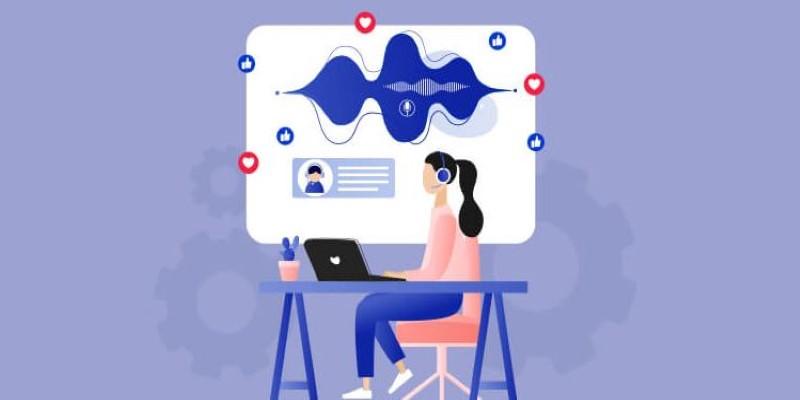
One of the primary uses is customer experience management. By analyzing recurring issues, companies can uncover product flaws, confusing policies, or service gaps. They can hear directly from the customers themselves—without sending out a survey or asking for feedback. If hundreds of customers call about a specific billing issue in a single week, that pattern becomes easy to spot through speech analytics. It also helps track how agents are responding, whether their tone is appropriate, and how often problems are resolved on the first call.
Another major area is compliance. In industries like finance or healthcare, there are strict rules about what can and can’t be said during a call. Speech analytics software can be configured to monitor for required disclosures, restricted phrases, or attempts at fraud. This reduces the risk of violations and makes audits more straightforward.
There’s also a strong role in training and development. Companies can identify high-performing agents based on how they communicate and replicate that success across teams. Rather than using subjective assessments, they rely on data drawn from real conversations. This leads to fairer evaluations and more targeted coaching.
And it’s not just customer service. Sales teams use speech analytics to understand what leads to successful calls. Which phrases trigger positive reactions? What objections come up most often? This level of detail can reshape entire sales scripts or strategies.
Challenges and Considerations
Speech analytics brings clear value, but it’s not perfect out of the box. One of the biggest challenges is accuracy, especially with diverse accents, background noise, or multiple speakers talking over each other. While modern speech-to-text systems have improved, misunderstandings still occur. That means results always need some level of validation, especially when tied to performance or compliance outcomes.
Privacy is another consideration. Just because a company can analyze a conversation doesn’t mean it should. Customers and employees may have concerns about being constantly monitored, even for legitimate business purposes. Transparency is key. Organizations need to inform participants, secure the data, and handle it in line with data protection laws.
There's also the issue of over-reliance. Some companies might treat analytics results as the absolute truth, overlooking the human context behind calls. A flagged phrase might not indicate a problem—it could be a joke, sarcasm, or a misheard word. The best systems allow human reviewers to intervene, validate, and fine-tune the results over time.
Implementation isn’t just about buying software. It requires proper integration with call systems, staff training, and a clear plan for how to use the insights. Without a defined goal—whether it’s improving customer satisfaction or boosting efficiency, speech analytics can become just another data-heavy dashboard that no one checks.
The Future of Speech Analytics
As technology keeps evolving, so does the potential of speech analytics. With the rise of generative AI and more refined natural language models, these systems are becoming more conversational in how they interpret speech. They’re better at understanding slang, emotion, and context. This means future speech analytics tools won’t just transcribe—they’ll interpret, summarize, and even predict customer behavior.

Integration with other data sources is another direction. When combined with chat transcripts, email feedback, and social media posts, speech analytics becomes part of a larger voice-of-the-customer strategy. It helps create a full view of the customer journey rather than just snapshots.
We’re also seeing more applications in sectors like healthcare, where analyzing doctor-patient conversations could support diagnosis or medical documentation. In legal settings, it could assist with accurate transcription and case analysis. The potential goes far beyond call centers.
At the same time, ethical AI development and transparent data use will remain in focus. Regulations are catching up, and companies will need to align speech analytics efforts with growing expectations around fairness, bias reduction, and consent.
Conclusion
Speech analytics is more than a technical tool—it's a change in how companies truly listen. Turning conversations into data reveals customer sentiment, highlights weak spots, and shows where communication succeeds or fails. It doesn't just capture words but the emotion and context behind them. Still, it requires careful application and human oversight. As speech technology evolves, its ability to interpret voices will expand, offering new ways to improve service and strengthen customer relationships.